

A short history of stained glass and the craft of the stained glass artist
The materials and techniques of an art that transforms light.
1What is a stained glass?
A stained glass is a composition made of multiple pieces of glass in different colours, tones and textures. These pieces are traditionally joined together with lead came strips or copper foil, although other supporting materials such as cement or silicone can also be used. The main purpose of a stained glass is to transform the natural light from outside in order to embellish the atmosphere of interior spaces.
Stained glass is often exclusively associated with religious art and churches, but it is important to consider a very different perspective. Stained glass is also an extraordinary monumental art, ideal for decorating homes, shops, and buildings, bringing art closer to everyday life.
2History of stained glass
The origins
Using glass to close openings was already known in antiquity. Remains have been found in Pompeii, Herculaneum, Rome and other cities of the Roman Empire. The closest technical forerunners of stained glass are mosaic and cloisonné enamel. The great development of this art began with the rise of Christianity.
The Pre-Romanesque
The earliest surviving artistic stained glass dates from the Carolingian period. These works were not related to architecture but to goldsmithing. The oldest stained glass found is in the French cemetery of Séry-lès-Mézières and shows a cross with floral ornaments and the letters alpha and omega. The oldest figurative western stained glass is a head of Christ from the 9th century, discovered at Lorsch Abbey in Germany. These first works already show the use of grisaille paint, applied in thick strokes to mark the eyes and hair.
The Romanesque
Romanesque architecture had very thick walls and small windows. For this reason, stained glass adapted to these spaces to tell biblical scenes, saints and everyday events within geometric medallions. The most outstanding works of this period in France are found in Le Mans, Poitiers and Chartres. In Germany, the windows of Augsburg Cathedral are the oldest in the world still completely intact.
In Catalonia, the first traces appeared in the Cistercian monasteries of Santes Creus and Poblet. Because the Cistercian order defended austerity, only geometric designs were allowed, with almost colourless glass and very soft touches of red, yellow and green.
The Gothic
Gothic architecture replaced heavy walls with lighter ones, making it possible to open immense windows. It is traditionally said that Gothic stained glass served to flood cathedrals with light. However, various expert voices defend an entirely opposite view. According to this alternative opinion, the real aim was to filter and reduce outside light in order to create a dark, mysterious and striking atmosphere for the community of believers.
The Sainte-Chapelle in Paris is an impressive example of this period, conceived as a glass reliquary 15 metres high. In Catalonia, the 14th century was the moment of greatest flourishing. Within this period the cathedrals of Girona and Tarragona stand out, as does the church of Santa Maria del Mar in Barcelona, with spectacular narrative scenes and large windows.
Renaissance and decline
With the arrival of the Renaissance, the art of stained glass converged with classical painting. In Florence, creators of the stature of Ghiberti and Donatello designed windows, introducing perspective and volume. Even so, from the 16th century onwards, and sharply during the 17th and 18th centuries, the craft entered a phase of progressive decline.
This decline was due to a combination of several factors. On the one hand, the continuous European wars destroyed numerous works. On the other, Baroque taste came to prefer extremely bright interiors that highlighted architectural gilding. In addition, the spread of the Protestant Reformation rejected ornamental decoration in places of worship, halting religious commissions across much of the continent. As a result, many workshops closed and important technical manufacturing secrets were lost.
Romanticism and the international revival
The 19th century brought a rediscovery of medieval art driven by Romanticism. In France, the architect Viollet-le-Duc promoted restorations that rebuilt windows according to the original style, although he often invented newly created elements. In contrast, the English critic John Ruskin defended a different position, based on respecting natural wear and the passage of time.
Internationally, William Morris and the Arts & Crafts movement revalued handcrafted work against industrialisation. In parallel, in the United States, John La Farge and Louis Comfort Tiffany developed opalescent glass and the copper-foil technique, bringing new richness of texture and making it easier to bring stained glass into architecture.
Modernism in Barcelona
In Catalonia, stained glass reached an extraordinary level of excellence thanks to Modernism and the impetus of the 1888 Universal Exhibition. Catalonia concentrated numerous workshops and stained glass went beyond the religious sphere to become part of everyday life, appearing in private homes and shops. Iconographically, the subject matter changed radically, favouring undulating lines, secular motifs, nature and the human figure.
The great architects of the period made stained glass a key part of their projects. Lluís Domènech i Montaner worked closely with the master glassmaker Antoni Rigalt on major works such as the Palau de la Música Catalana and Casa Lleó Morera. Antoni Gaudí, for his part, added large glass pieces to Casa Batlló and experimented with the trichromy technique at Mallorca Cathedral. Workshops such as Amigó, Rigalt i Granell, Maumejean, Frederic Vidal and Espinagosa also signed works of high artistic value throughout the country.
3Materials and tools of the stained glass artist
The materials
Glass
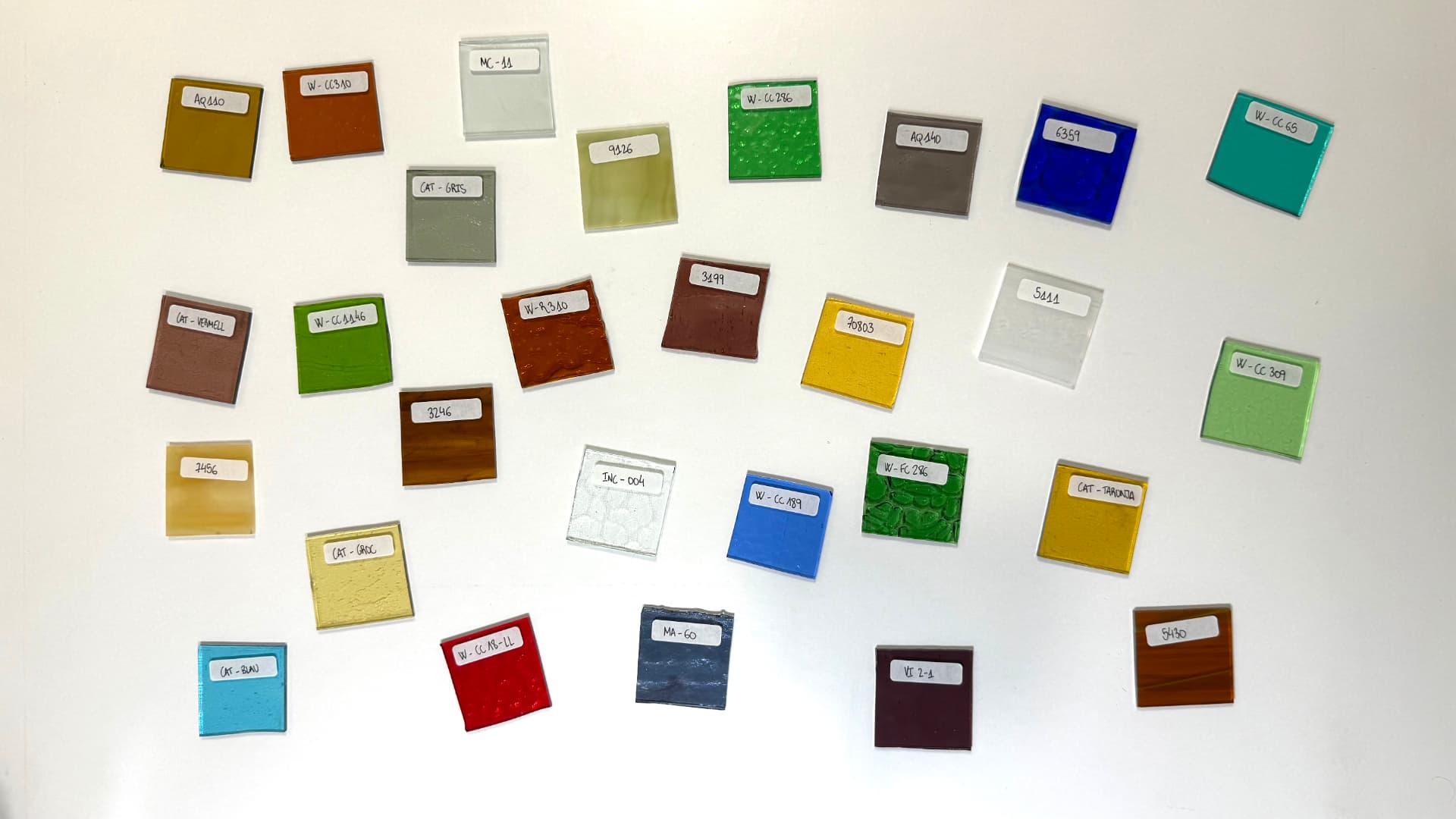
The manufacturing of glass dates back to the Bronze Age. It is produced by melting vitrifying materials such as silica, flux materials like soda, and stabilizers such as lime at temperatures reaching up to 1,650 ºC. Colors are achieved by adding metallic oxides to the molten mass. Cobalt oxide produces blue, cadmium sulfide creates reddish tones, and chromium oxide yields emerald green.
There are many different types of glass depending on the manufacturing method or the intended use. Among them are pure crystal, strass glass, blown or antique glass with its characteristic bubbles, flashed (plaqué) glass which provides extreme luminosity, opal glass, cast glass, cathedral glass, printed glass, and American or Tiffany glass.
Enamels and grisailles
Vitreous paints are traditionally used to paint on glass. Some historians believe that the realism of these paintings is essential for classical art. A different perspective argues that omitting paint and kiln-firing allows one to enjoy the pure and natural color of the glass, generating a much more vibrant and direct work of art. The classic paints are as follows:
- Grisaille: A black or brown paint composed of iron or copper oxide. It is applied to the inner surface of the glass and fired at 610 ºC to fix it permanently. Starting in the 14th century, silver stain was introduced and applied to the exterior surface.
- Enamels: Brightly colored paints with lower luminous consistency. They are fired at a maximum of 600 ºC to prevent the oxides from volatilizing.
The metals
- Lead: A soft, malleable, grey-colored metal. It comes in H-shaped strips (cames) featuring a central core and flanges into which the pieces of glass are fitted.
- Copper foil: A thin adhesive-backed copper sheet. It is wrapped around the edge of each piece of glass, providing lightness and allowing designs with very fine structural lines.
The supporting materials
- Stearine: A solid paste containing inorganic acids, rosin, and olive oil. It is applied to lead or copper to chemically clean oxides and allow tin solder to bond correctly.
- Tin (Solder): A filler metal used in the form of wire (alloyed with lead) to firmly solder and join both lead cames and copper foils.
- Patinas: Chemical liquids (such as copper sulfate) that oxidize solder joints to darken them and give them an antique appearance.
- Mastic or Putty: A paste made of linseed oil and chalk. It is worked in between the lead and the glass, preventing water and wind from penetrating inside, and dries fully in thirty days.
The tools
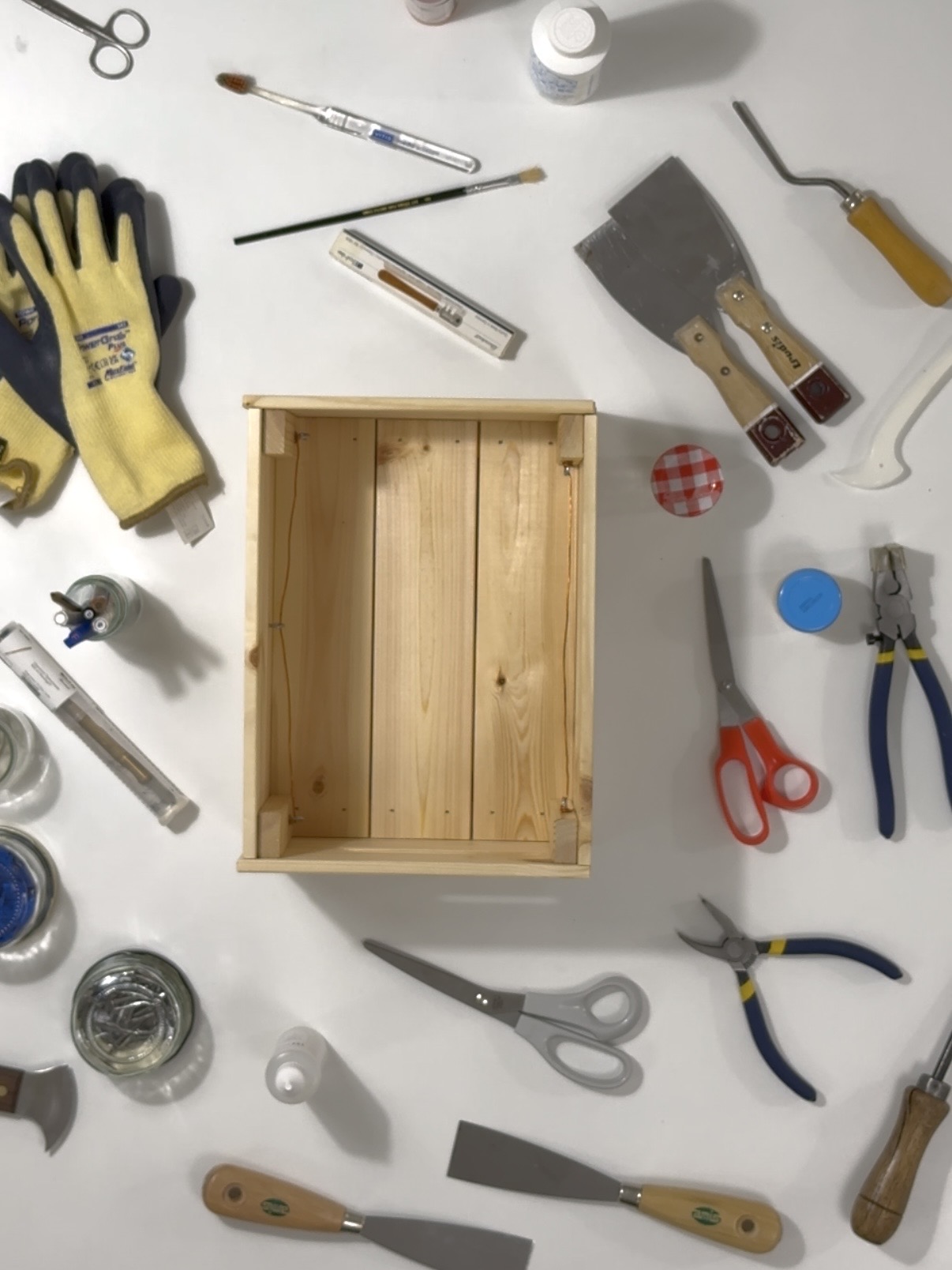
There are many tools, and the beauty of it is that every artist makes them their own. Tools that work well are kept, others are custom-made, and many are bought ready-made to make the work easier.
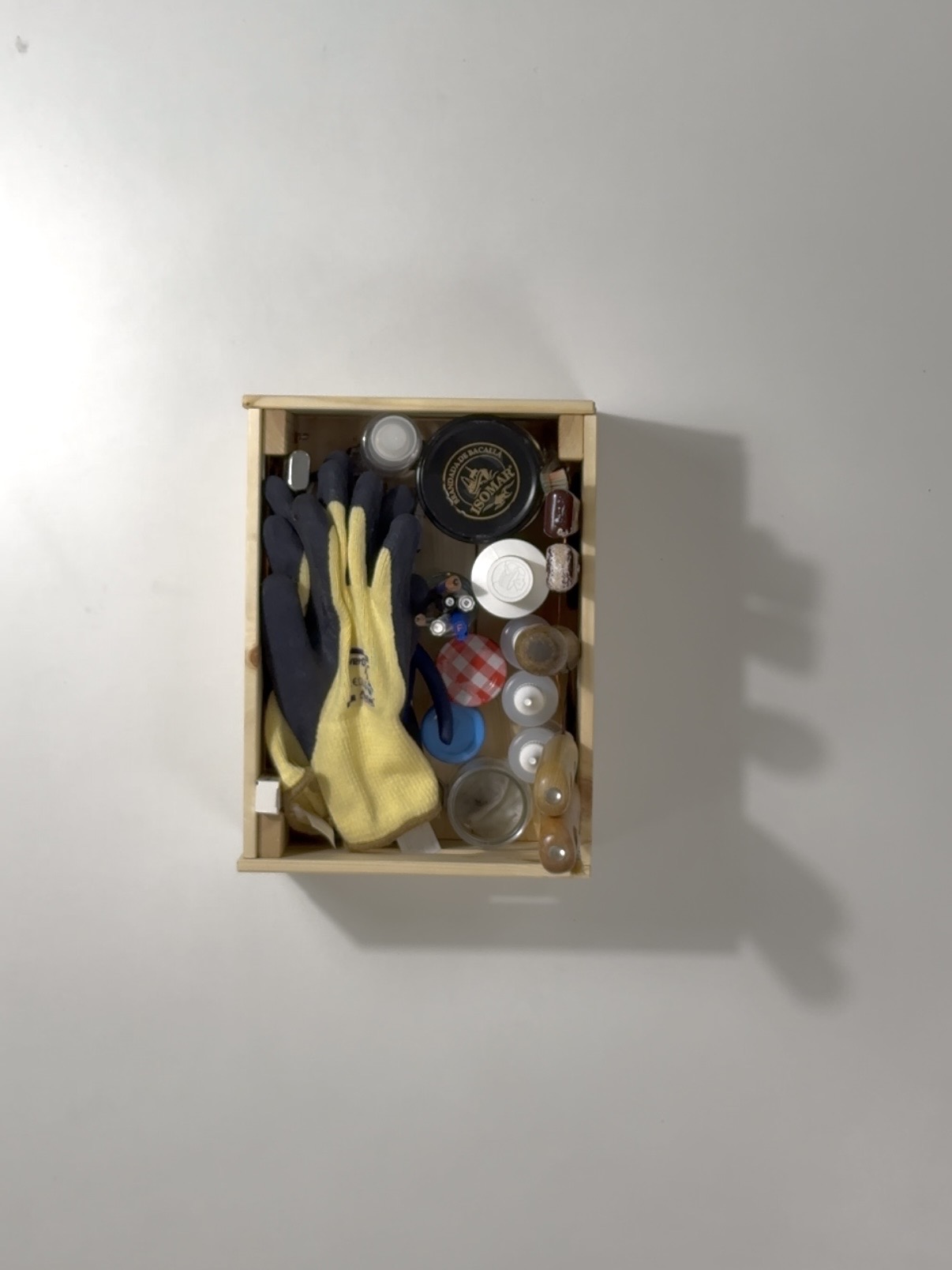
- Workshop furniture: A light table with a diffuser glass to evaluate colors before cutting, a wooden shelving unit to store glass, and large, sturdy tables for cutting and assembling the panels.
- Design tools: A paper cutter and stained glass shears. The latter feature three blades that cut the paper template while removing the exact space taken up by the lead core (approx. 1.75 millimeters).
- Cutting tools and pliers: Steel glass cutters, tungsten carbide cutters, and the classic diamond tool. Circle cutters and diamond disc saws are also used for very thick glass. A grozing iron (or breaking pliers) features notched metal plates used to nibble and fine-tune cuts. Running pliers are used to open scores, breaking pliers separate wide fragments, and grozing pliers nip away excess glass without shattering it.
- Lead and soldering tools: A wooden and iron hammer (to adjust glass and drive temporary fixing nails), a lead knife, a "tingle" (to open the lead flanges), and spatulas for applying putty. Electric soldering irons of various wattages with copper tips are used.
- Abrasive and cleaning tools: Silicon carbide blocks, diamond hand pads, and electric grinders to smooth glass edges. Tampico brushes, grass brushes, and wire brushes are used to clean dried putty and polish the finished work.
4How is a stained glass made?
The manufacturing process follows a meticulous artisanal method where the artisan's hand is completely indispensable. The artisan studies the location, the lighting, and creates a preliminary design, usually to scale. From there, a full-size pattern is drawn, defining exact cutting lines and glass colors.
The pattern is cut to create the necessary templates for glass cutting, using special three-bladed shears in the traditional lead method (to remove the exact space of the metal core) or regular scissors when using copper foil. Following these templates, the artisan scores the glass with a glass cutter or diamond, gives a sharp tap to break the piece, and smooths the edges with a grinder or stone to achieve a safe, perfect fit.
If the work requires painted details, this is the moment to apply grisailles or enamels and place the pieces in a kiln to fire and fix them permanently.
Assembly varies depending on the chosen technique. In traditional leaded work, the glass pieces are inserted into the lead cames on the workbench, temporarily securing the structure with nails. In the Tiffany technique, the entire perimeter of each piece of glass is meticulously wrapped with adhesive copper foil.
Stearine flux is applied to the joints to chemically clean metal oxides and allow the tin solder to bond properly. Using an electric soldering iron, tin solder is applied to firmly join lead intersections or entirely cover the copper foil matrix.
For leaded stained glass, a special mastic putty is worked between the lead and the glass using a brush, ensuring the work is totally waterproof and rigid. Finally, liquid patinas are applied to give the metal the desired tone, the entire surface is vigorously cleaned, and the stained glass is ready for final installation.
Bibliography
- Valldepérez, P. (2004). El vitral: La técnica, el arte y la restauración de los vitrales explicados con rigor y claridad. Parramón.
- Rodríguez, J., & Pascual, E. (2008). Vidrio emplomado: Las técnicas del vidrio emplomado y cobreado explicadas paso a paso. Parramón.
- Keshava. (1990). Vitrall contemporani en l'arquitectura: 7 artistes. Ajuntament de Barcelona.
- Povo, M. (1985). 53 oficis de Barcelona: Guia il·lustrada d'artesans tradicionals. Ajuntament de Barcelona.
- Gerstein, M., & Wrigley, L. (1997). Creación de vitrales. Círculo de Lectores.
- Ribas, C. (2023). Lluís Domènech i Montaner: Home de la Renaixença, arquitecte del Modernisme. Triangle Postals; Ajuntament de Barcelona.
- Maspoch, M. (2008). Galeria d'autors: Ruta del Modernisme de Barcelona. Institut Municipal del Paisatge Urbà i la Qualitat de Vida; Ajuntament de Barcelona.
- Campàs i Montaner, J. (1993). L’art modernista: Una visió històrica. Barcanova.
- Vila-Grau, J., Rodon, F., Biblioteca President Pujol, & Fons Albert Ràfols Casamada i Maria Girona. (1982). Els Vitrallers de la Barcelona modernista. Polígrafa.
- Fundació Joan Miró. (1984). El vitrall modernista. Fundació Joan Miró; Departament de Cultura de la Generalitat de Catalunya.
- Muñoz i Domenech, P. (1983). Contrallums: vitralls de l’Eixample: exposició del 20 d’abril al 31 de maig de 1983, Casa Elizalde. Consells Municipals dels Districtes IV i VI; Ajuntament de Barcelona.
- Archer, M., & Pitkin Pictorials. (1979). Stained glass. Pitkin Pictorials.